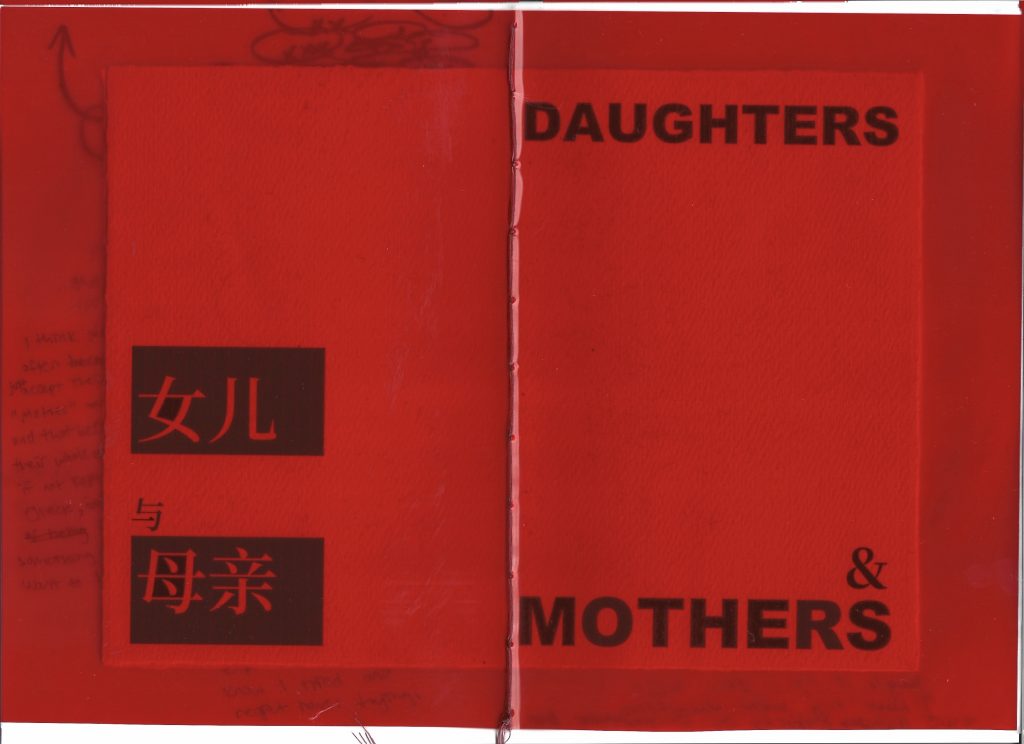
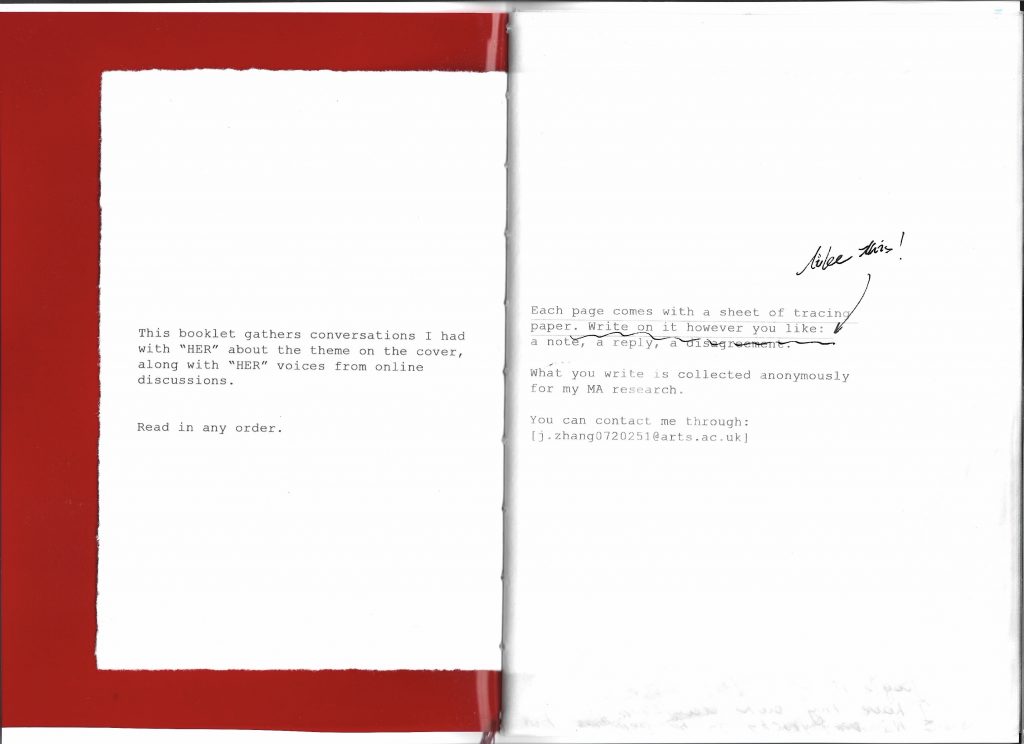
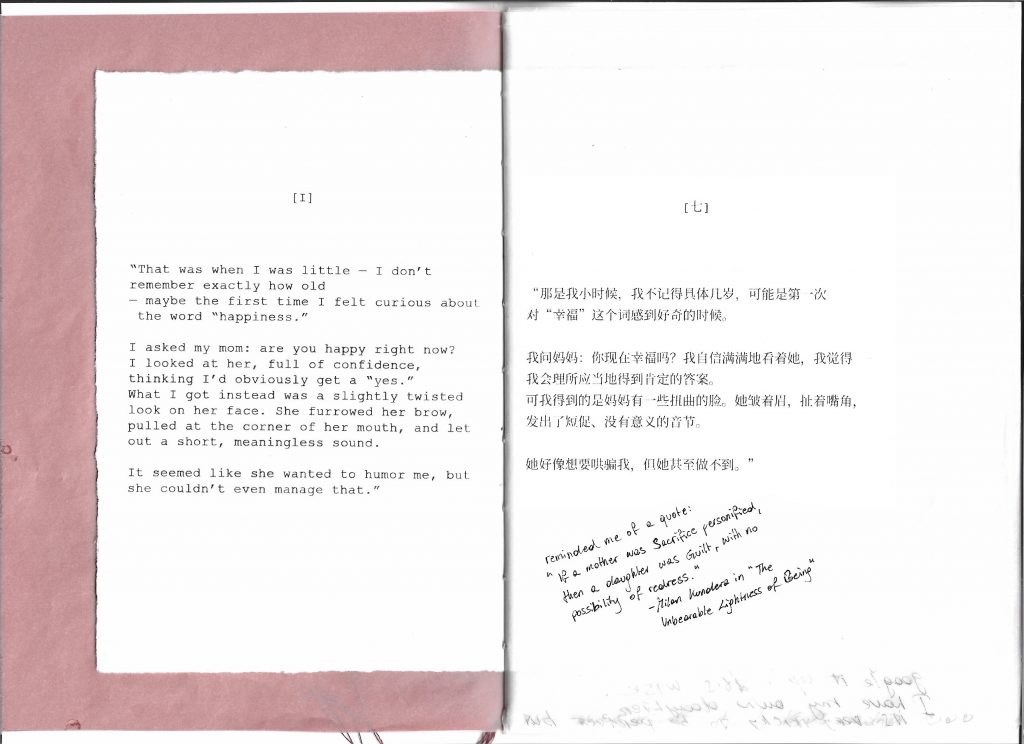
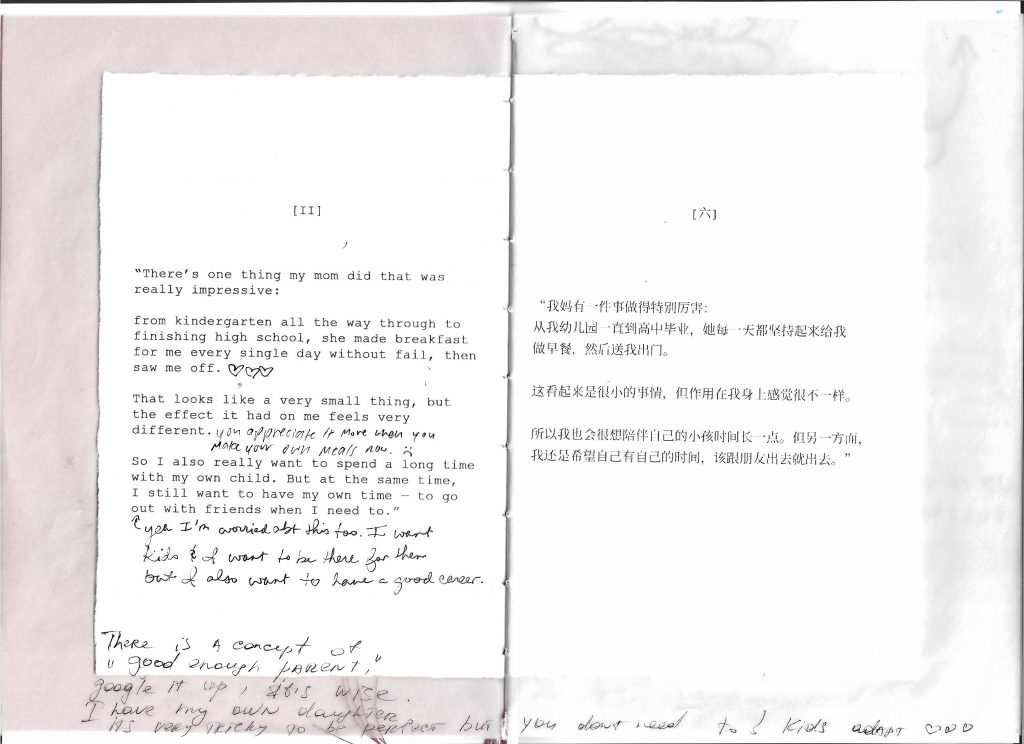
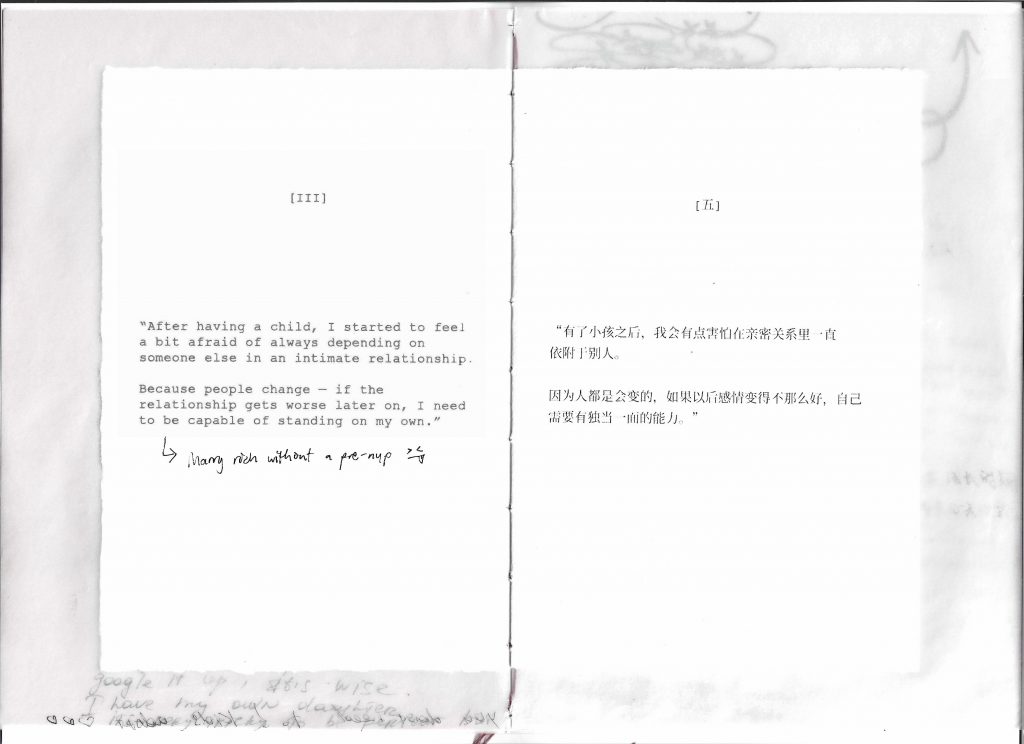
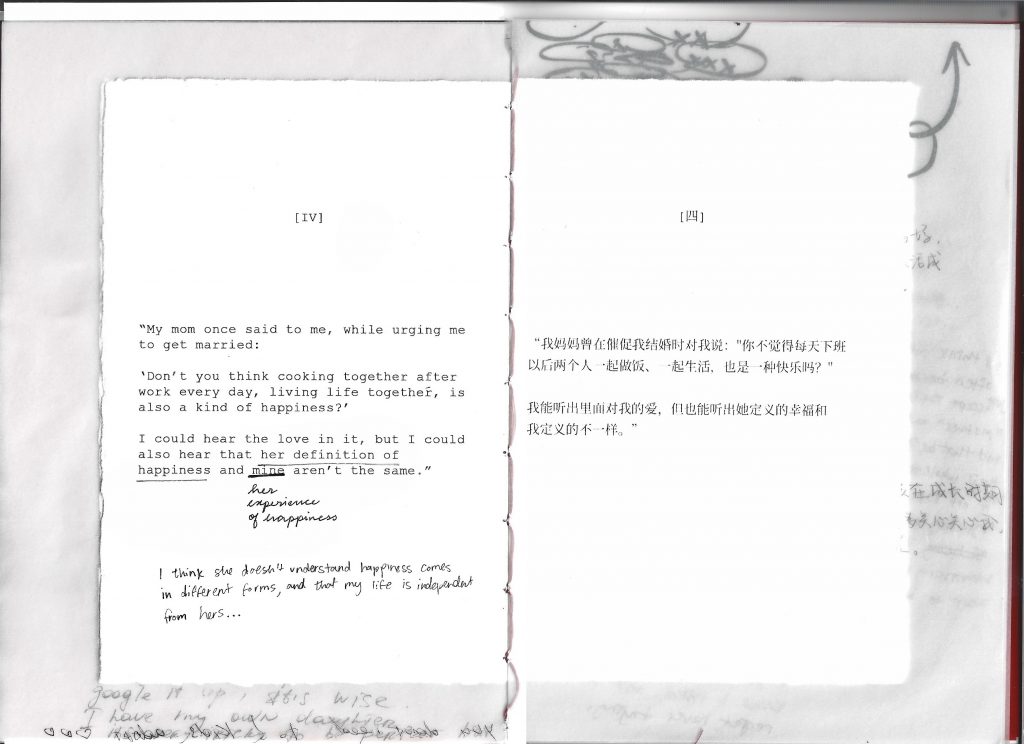
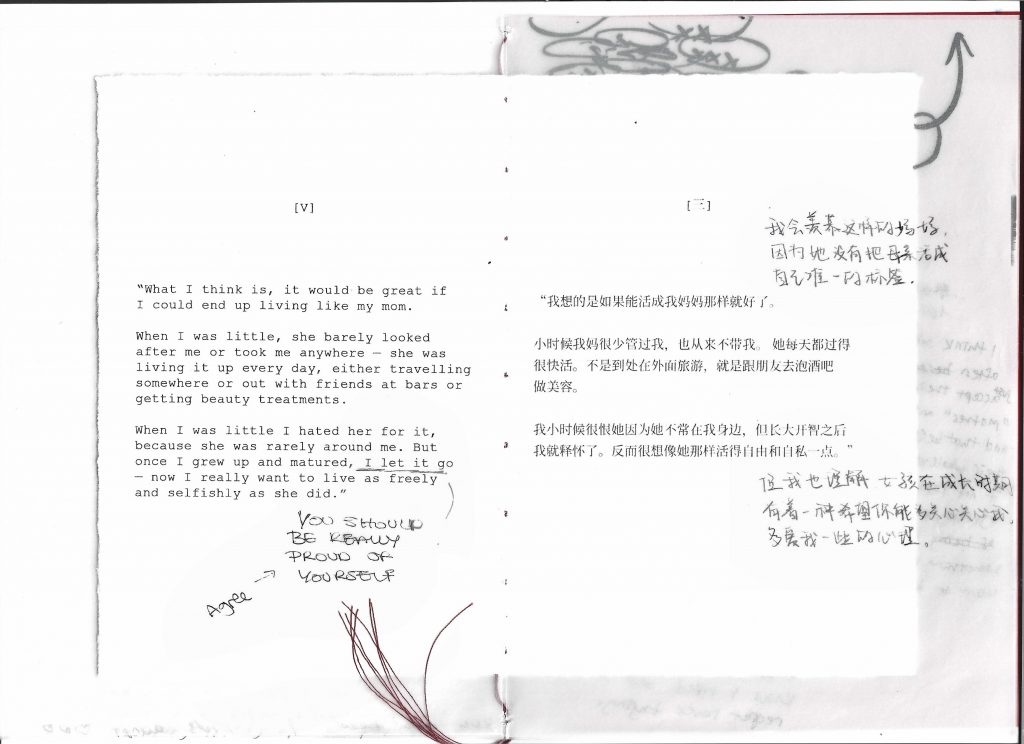
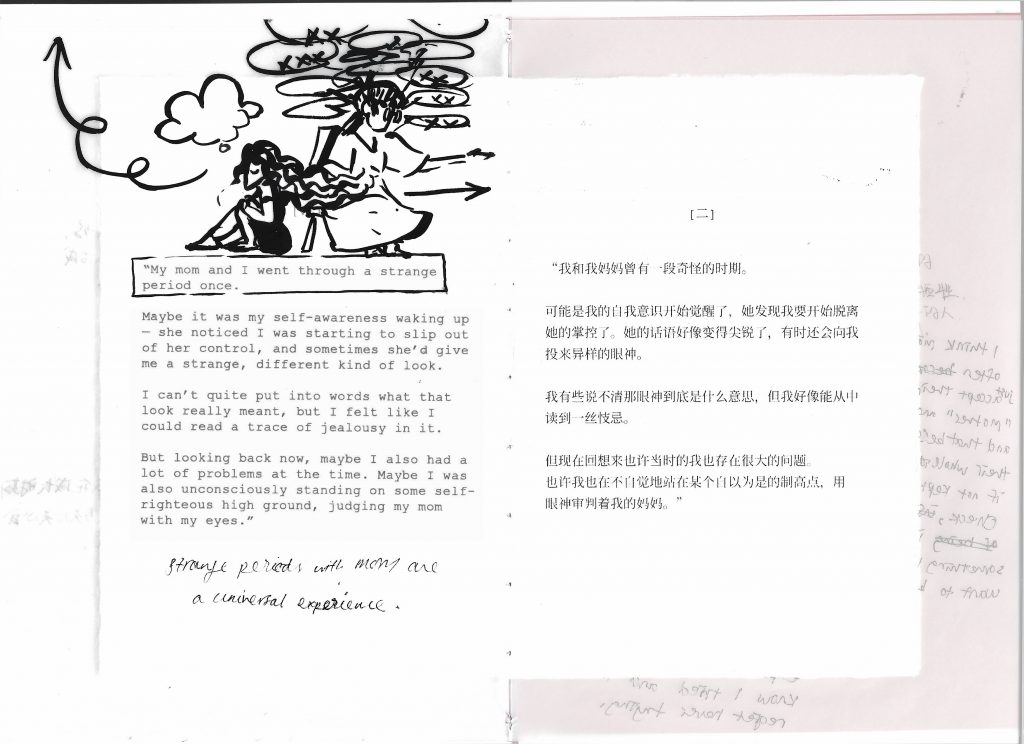
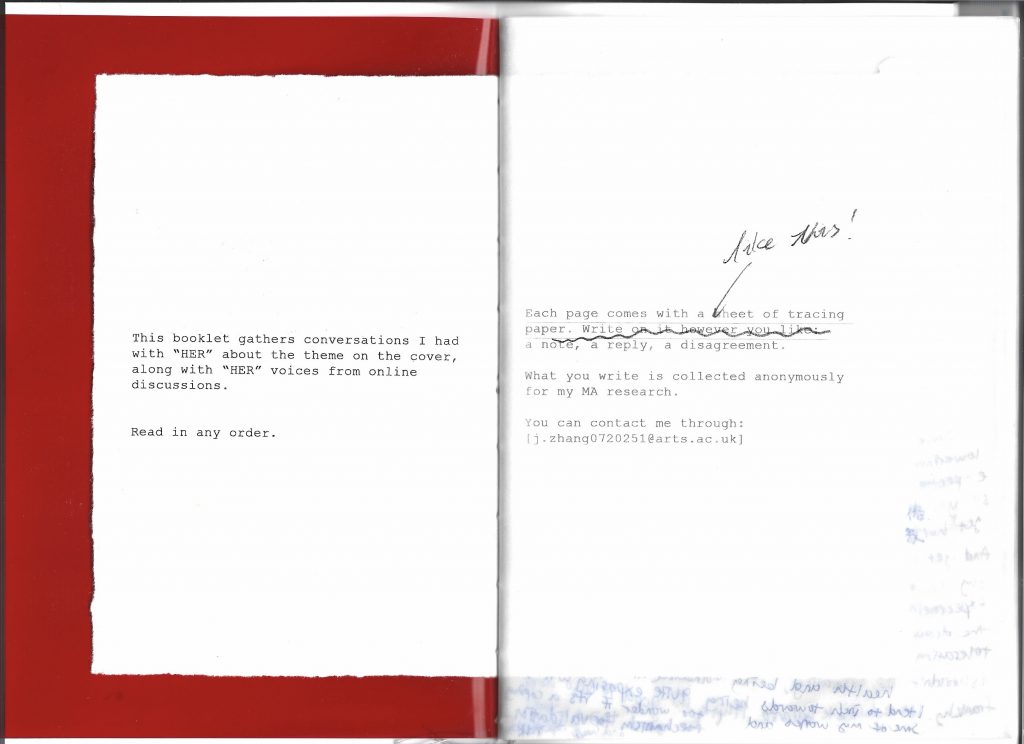
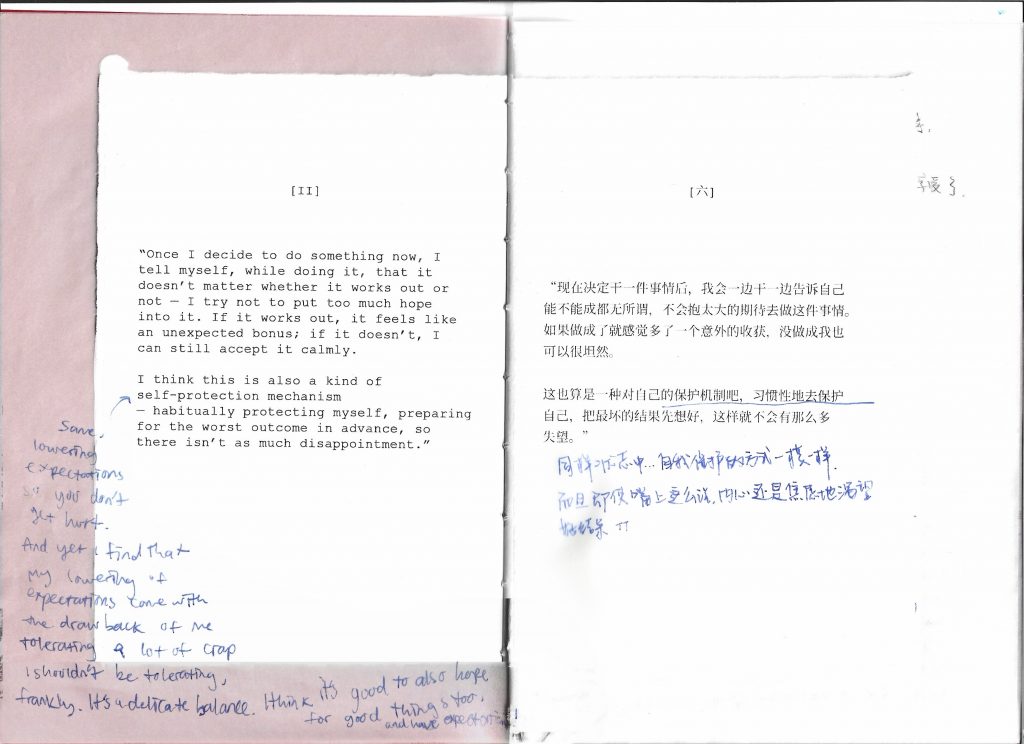
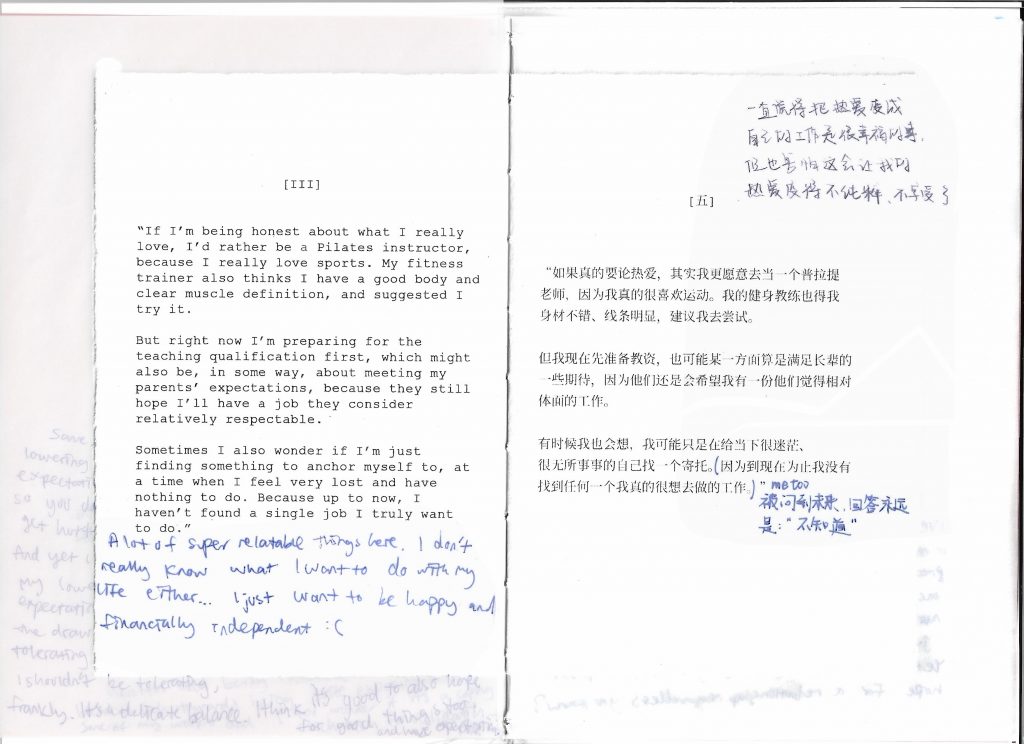
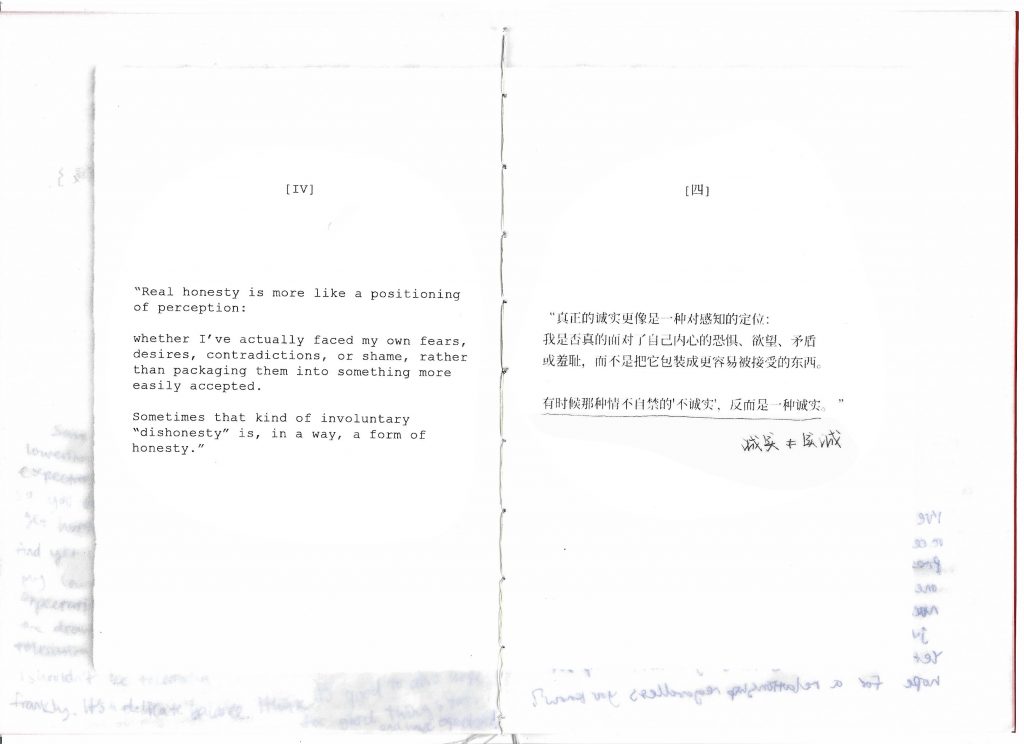
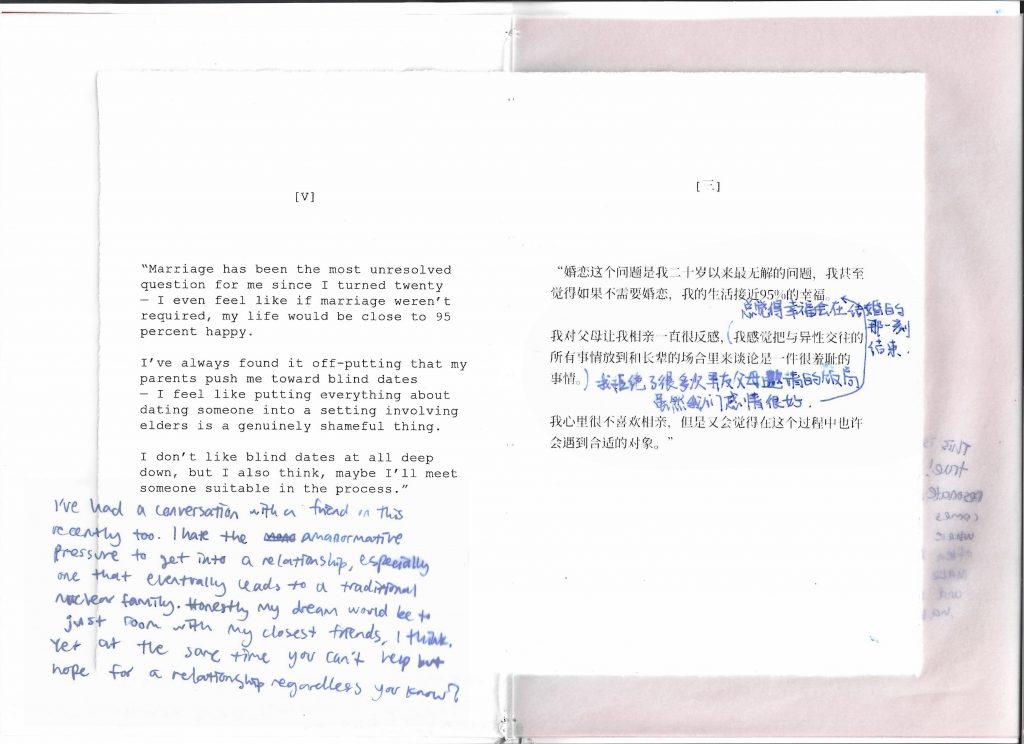
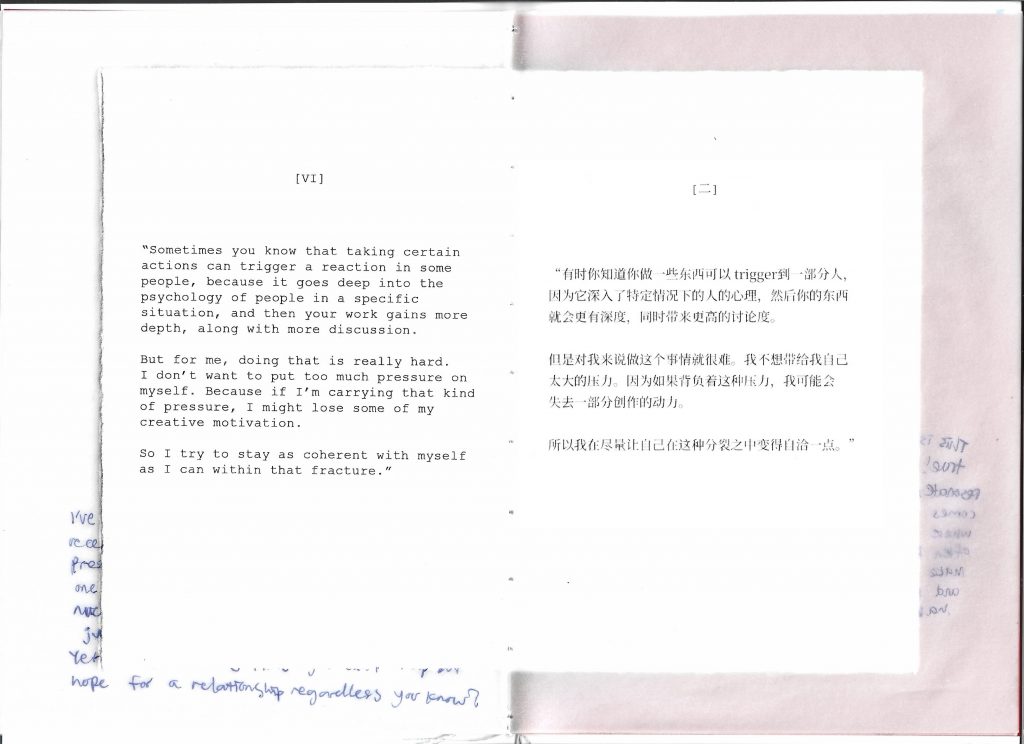
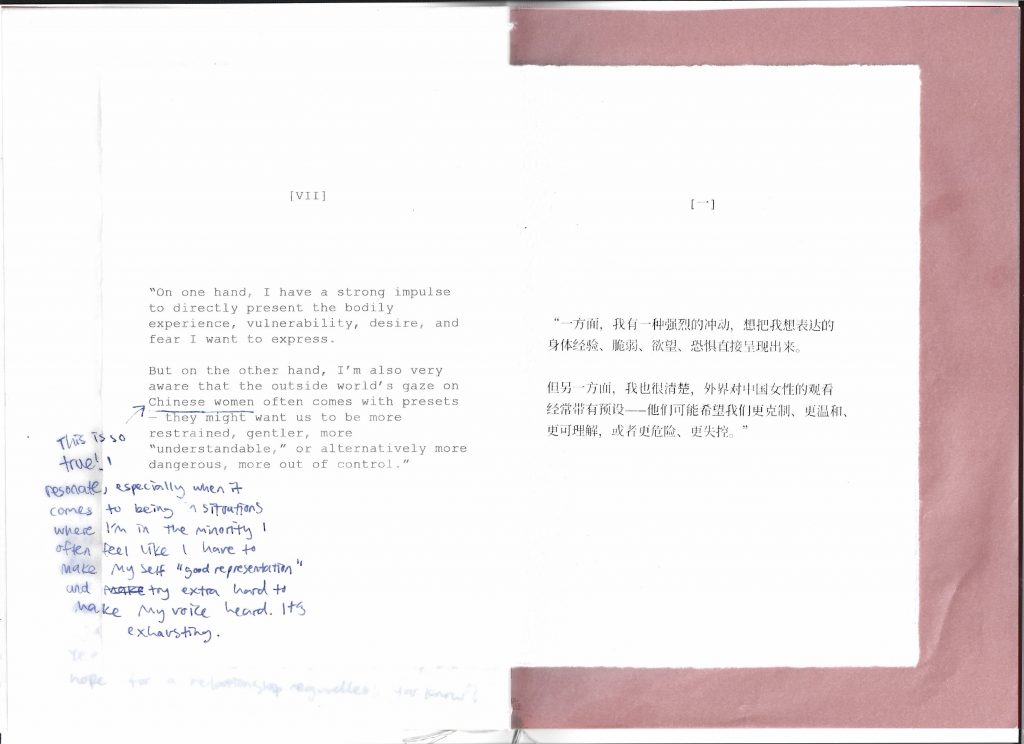
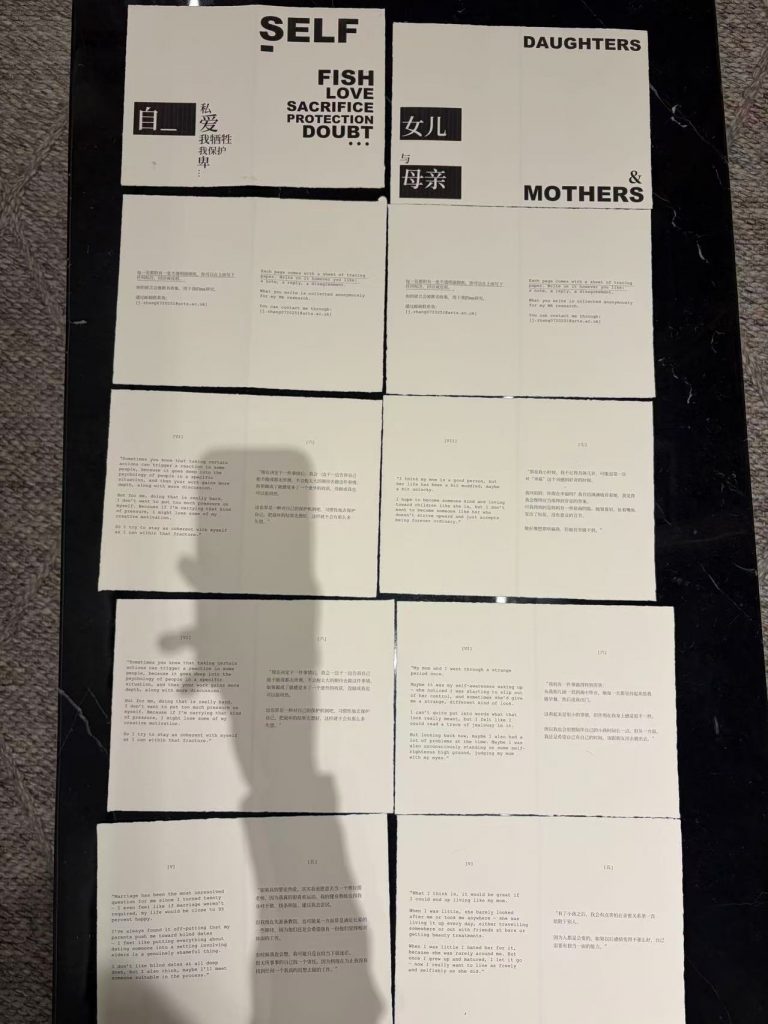
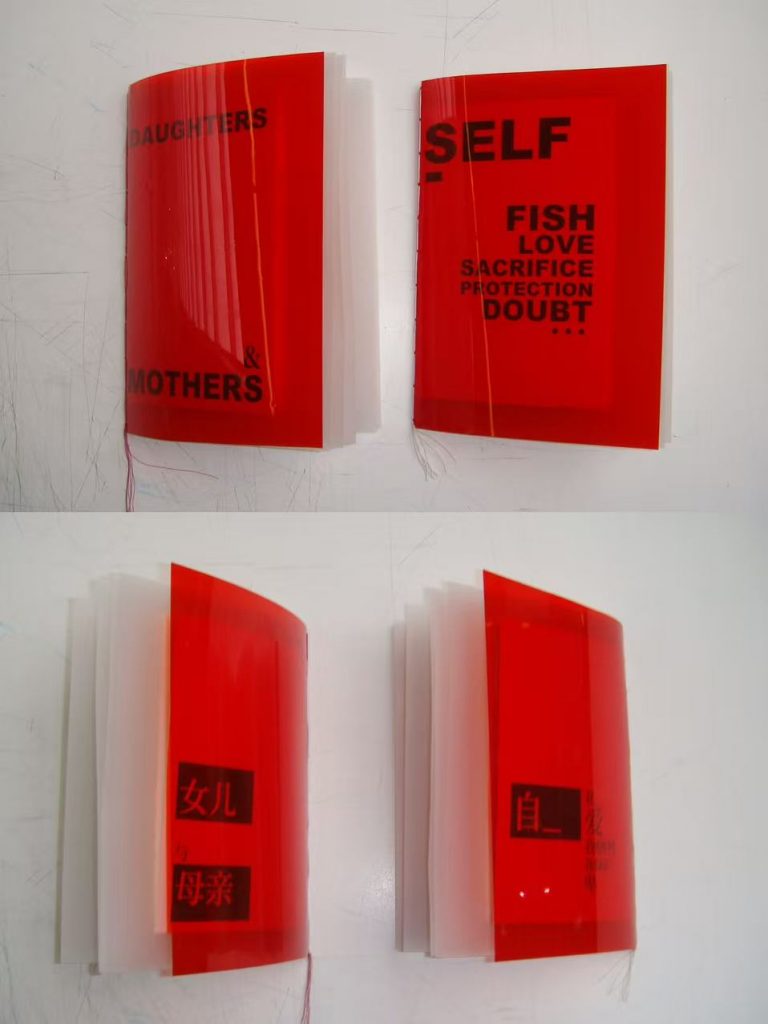
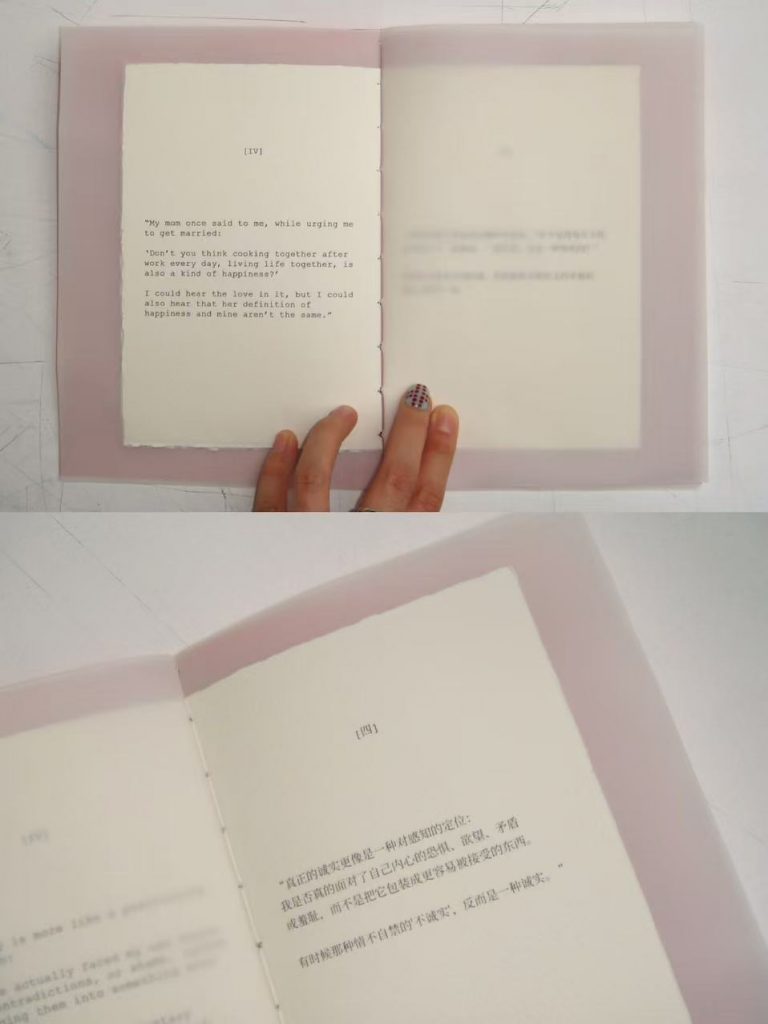
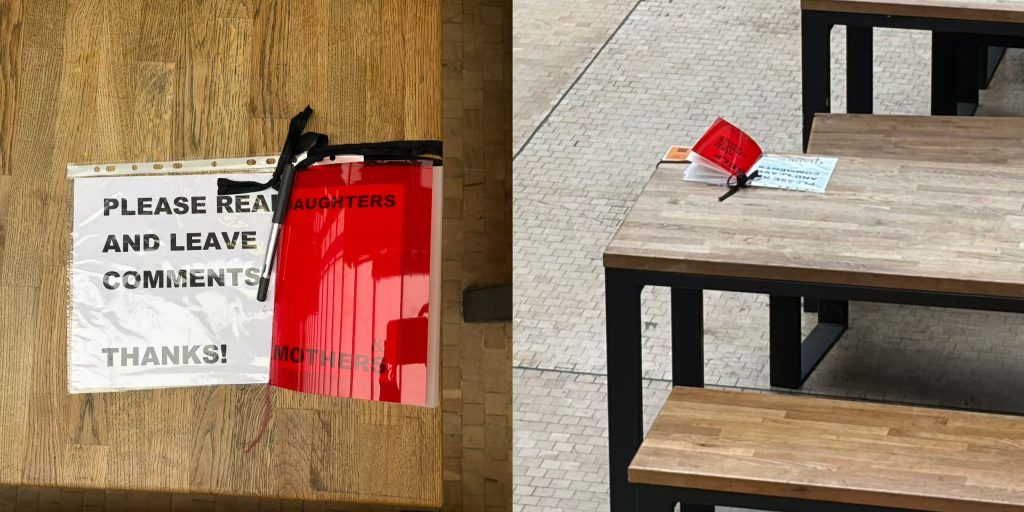
Two booklets were out for one week. Together they hold 30 written comments, 18 in English and 10 in Chinese. And the following are some points and phenomena I have recognized.
“Same, but…”
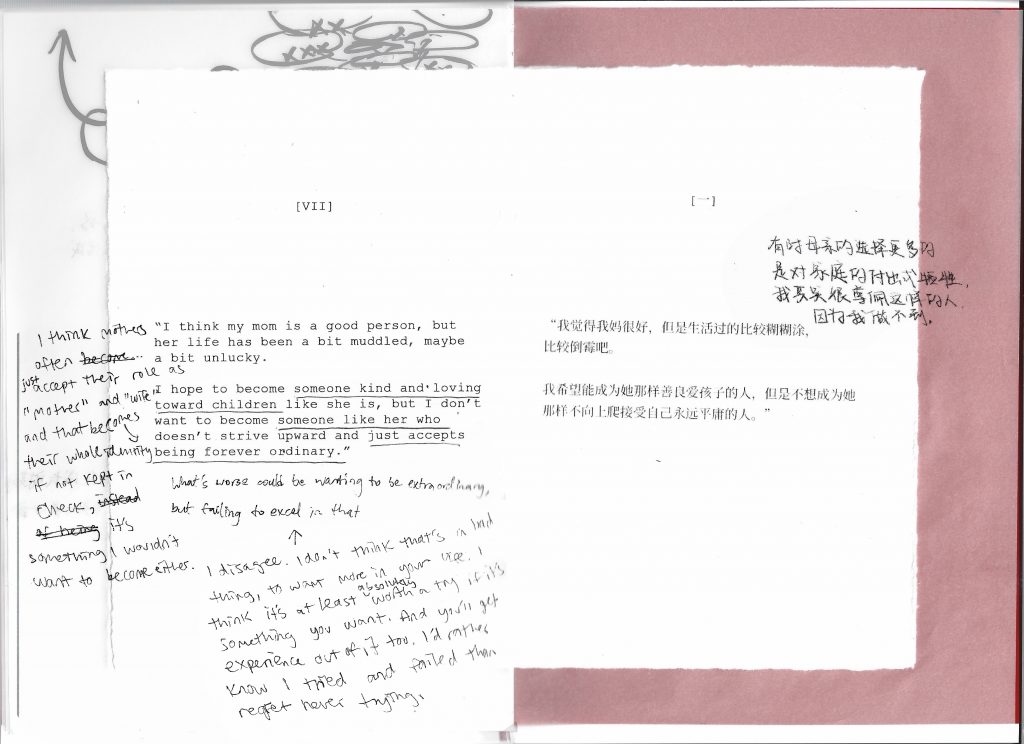
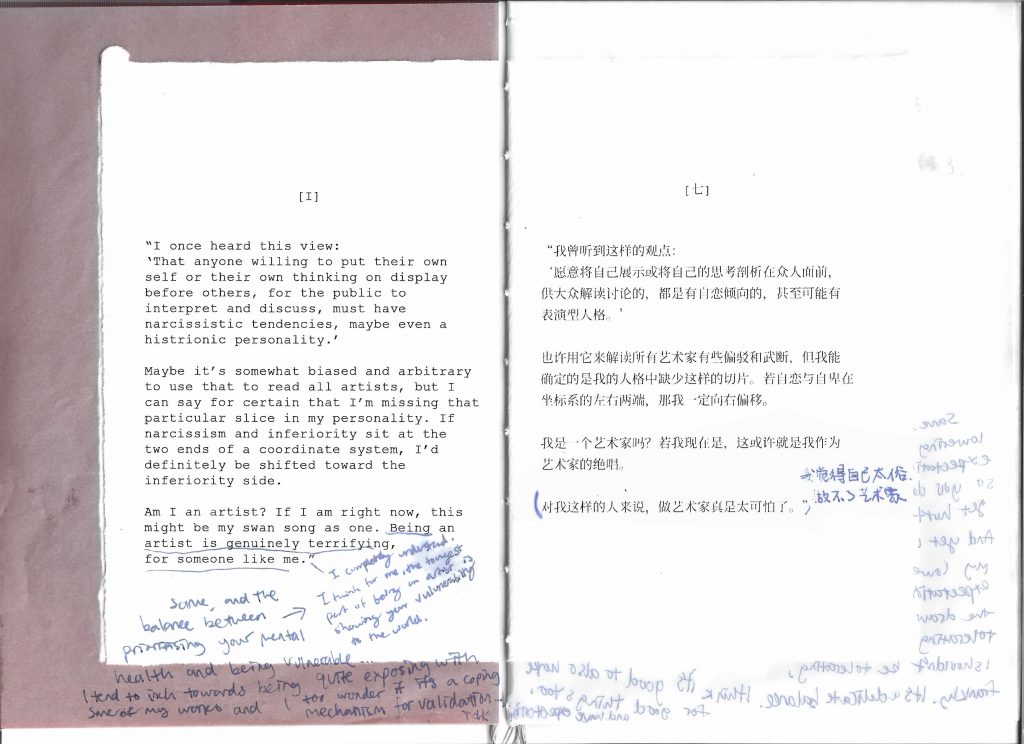
Most readers recognised a quote and then added a counterweight. The tension sits inside the reader as much as between the reader and the culture around them. Nobody blamed their mother or anyone else. They described a balance they are still working out.
Readers brought their own frames
Kundera, “good enough parent” and “amatonormative” were not in the booklets. A reader supplied them.
Concrete beats abstract
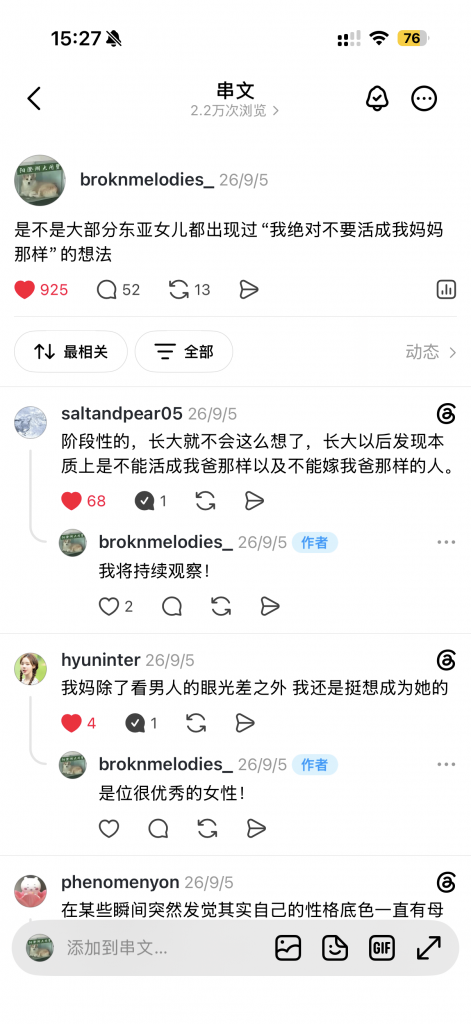
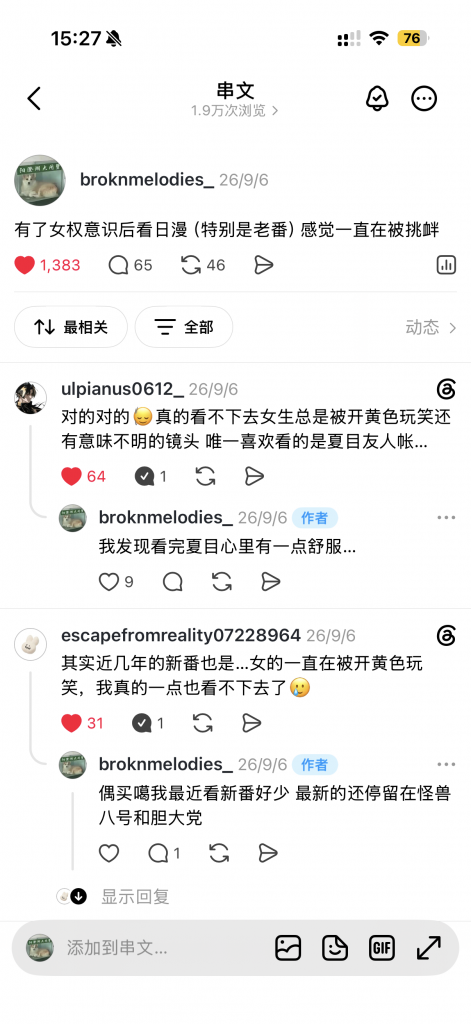
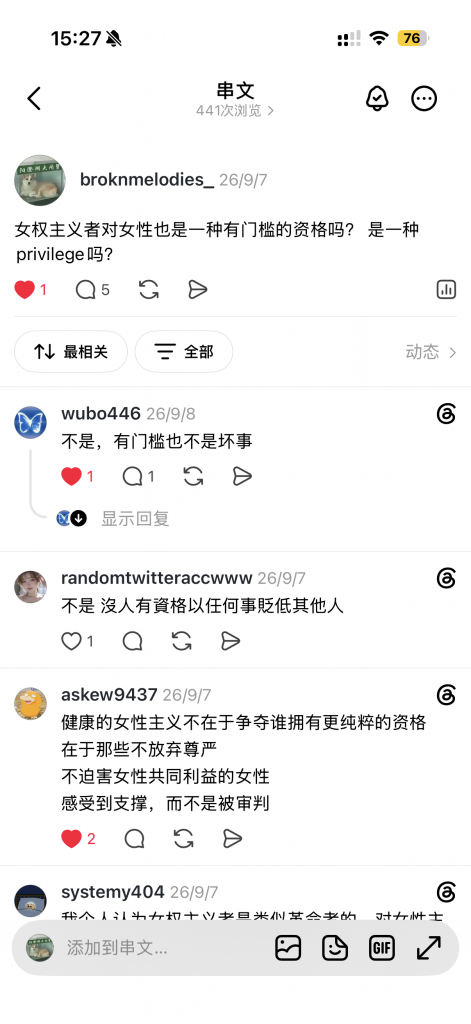
Quotes about a specific scene (the daily breakfast, my mother’s line about cooking together after work, blind dates) drew the most writing. Abstract ones (honesty, triggering others while staying coherent) drew almost none. This matches what happened on Threads, where my personal-experience post got far more response than the post asking for a definition.
English and Chinese comments feel different
Length is the obvious difference, but there is more.
English comments were often addressed to someone: to the “author” (“I completely understand”), or to another reader (“Agree”, “I disagree”). Also, all of the exchanges between readers are in English.
Chinese comments mostly read as statements to no one, such as “总觉得幸福会在结婚的那一刻结束( I always feel that happiness ends the moment you get married.)” or “我拒绝了很多次男友父母邀请的饭局,虽然我们感情很好。( I’ve declined my boyfriend’s parents’ dinner invitations many times, even though we have a great relationship.)”.
Plus, the Chinese comments never gave advice, while a few English ones did. This could reflect a cultural reluctance to instruct, but Chinese-language Threads comments do instruct, so it may instead depend on the setting, or on how close each reader is to the experience. I can’t separate these with 30 comments.
One comment about being watched
A reader wrote that as a member of a minority she feels she has to be “good representation”, and that it is exhausting. It answers the quote about the outside gaze on Chinese women, but she framed it as minority status, not Chinese womanhood. This raises the question of whether the fracture is specific to Chinese women or shared by people in a watched position.