1. Why offline
At the last tutorial, Cecilia asked me to design a new intervention that can happen somewhere other than the internet. This is more than a change of venue. On Threads, people choose to enter a conversation. In a corridor, people are just passing by, with no prior interest in the topic.
2. What goes into the booklets
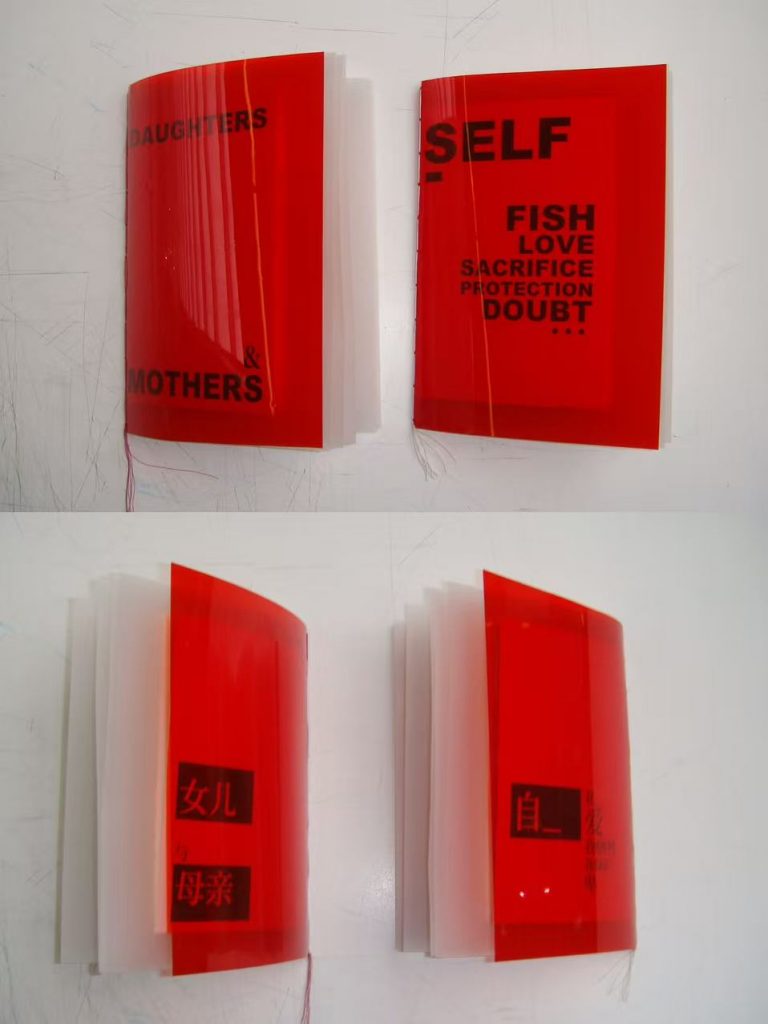
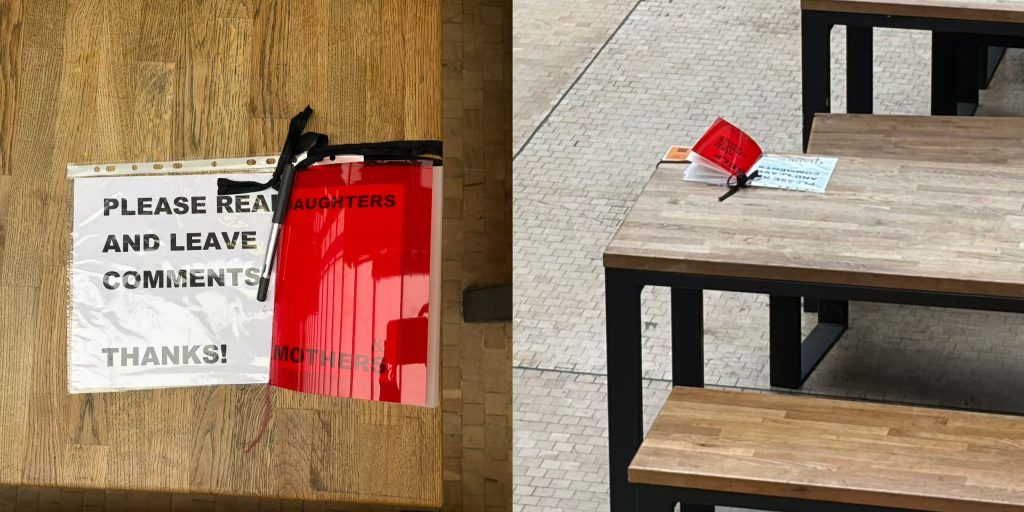
I am turning the material I have collected (interviews and Threads posts) into small booklets, to be left in different places around the campus for a week. Readers can write directly on a sheet of tracing paper laid over each page.
I first planned three booklets, one for each of three themes: self-love and selfishness, the daughter’s role, and who sets the rules (the qualification to be a feminist). I ended up with two. Time was one reason, but the main one was condensing: I wanted each booklet to have one clear subject that a stranger could take in within a few pages.
The theme I left out, “who sets the rules”, is the one that needs the most analysis. It fits better in the report than in a corridor.
The two booklets now share one logic. They are about what a woman is born with, not what she chooses: a self, the identity of being a daughter, and a mother.
- Booklet 1: Sel-fish, love, sacrifice, protection, doubt… How she relates to herself.
- Booklet 2: Daughters and Mothers. The line running from daughter to mother, and what she takes from it or leaves behind.
3. Form: no framework
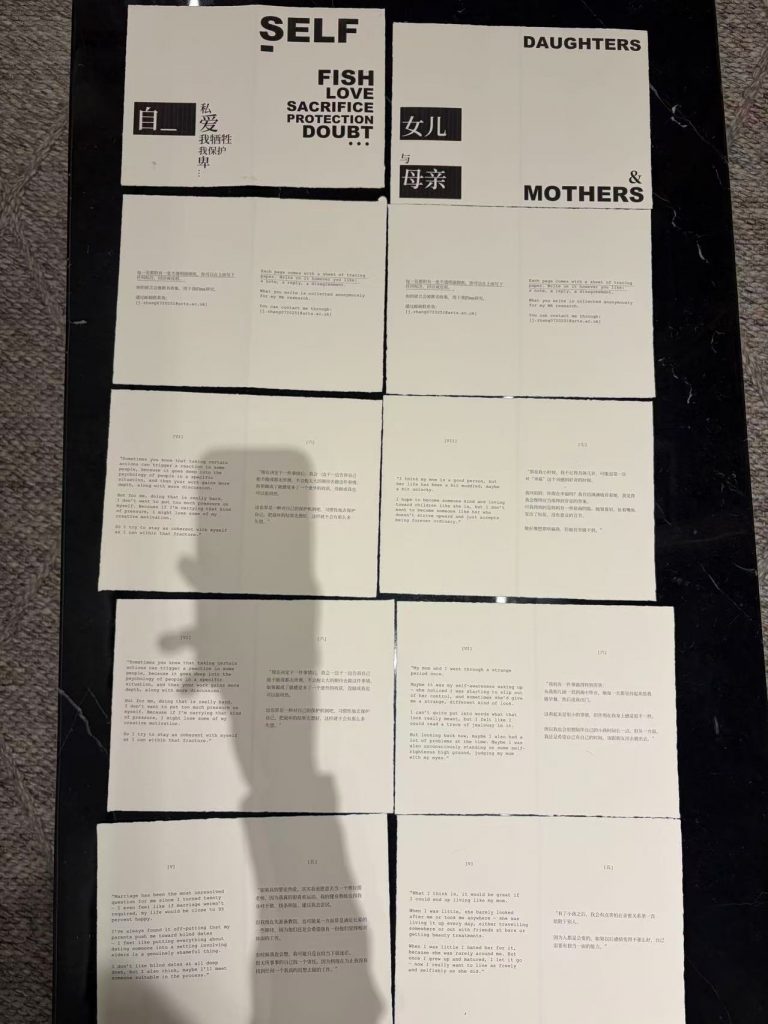
Every page holds one quote, and the booklets contain no explanation, no argument and no questions. This comes from two places.
- Mu’s interview and David’s feedback: I shouldn’t give the audience a framework, because Mu rejected the one I offered her.
- My own Threads data. My third post asked a question of definition (“is being a feminist a qualification?”) and got less response. My first post, which came from personal experience (“whether East Asian daughters have all thought “I never want to live like my mother”), got the most. People respond to something they recognise, not to something they are asked to judge.
I originally drafted a question under each quote, then removed them. A question is also a framework: it steers the reply in a direction I have already chosen.
The tracing paper is a design decision too. A comment written on the sheet answers one specific sentence rather than the whole booklet, and I can see exactly which quote triggered it.
Each booklet opens with a short statement explaining that it gathers conversations with “HER” and voices from online discussions, and invites the reader to write, or not to write.
4. Editing and ethics
The quotes come from my interviews, from Threads comments, and from my own writing. I edited them and, in places, merged several voices into a single first-person voice. This has a design reason: the reader is not led by “an interviewee” who has an identity, and each line stands on its own.

5. What I expect, and what I don’t know
When the booklets come back, I will analyse the comments with the same thematic analysis I used on the Threads data. What I want to see:
- whether the two booklets get different amounts and kinds of response
- whether people respond to the quote, or use the tracing paper to tell their own story
- whether anyone writes something opposite to the quote
- whether anyone sits at the stage of 疑 (sensing something is off, without a name for it), which is the group I most want to reach
The biggest unknown is simple: will people who pass by actually write? I don’t know yet, and that is what this intervention is testing.
Leave a Reply